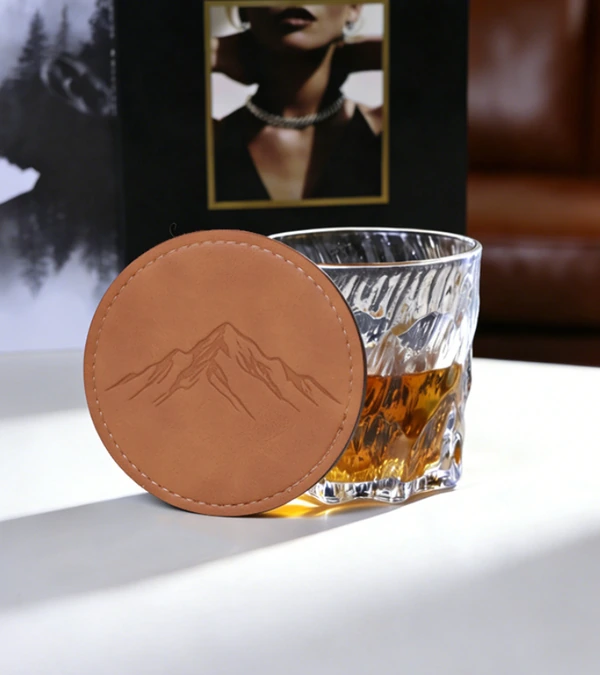
These details affect far more than the appearance of the finished product. They determine manufacturing feasibility, setup costs, sample approval, quality consistency, and the total cost of your order.
A 100 mm screen-printed cork coaster, for example, has different production requirements from a molded silicone coaster, a full-color ceramic gift set, or a 2 mm absorbent paper beer mat. Even if all four products carry the same logo, their prices and manufacturing processes will not be directly comparable.
This wholesale buying guide explains how to customize coasters for restaurants, breweries, corporate gifts, hospitality businesses, promotional distributors, retail brands, and events. It also provides practical artwork guidelines, quality-control checkpoints, and a ready-to-use request for quotation (RFQ) checklist.
Quick Answer: How Do You Order Custom Coasters in Bulk?
For most B2B projects, the most efficient ordering process follows seven steps:
- Define the application: Decide whether the coasters are for beverage service, promotional distribution, retail, or corporate gifting.
- Select a suitable material: Choose cork, silicone, ceramic, absorbent paper, leather, or another construction according to your requirements.
- Confirm size and thickness: Specify the required dimensions and any functional expectations.
- Select the logo process: Match screen printing, UV printing, full-color printing, embossing, debossing, or other methods to your artwork.
- Confirm quantity and packaging: Include the quantity per design, number of designs, and packing format.
- Review a quotation and sample: Confirm setup charges, specifications, sample fees, and delivery terms.
- Approve bulk production: Finalize the artwork and reference sample before manufacturing.
Important: MOQ, production time, and unit pricing should be confirmed for the actual construction and printing process. There is no universal minimum order quantity that applies to every custom coaster.
1. Choose the Right Coaster for Your Application
Before discussing printing technology or wholesale pricing, determine how the finished coaster will be used.
For example, a brewery ordering printed drink coasters for a promotional campaign may prioritize liquid absorption and cost per piece. A corporate buyer developing executive gift sets may prioritize appearance, logo finishing, and custom packaging.
| Application | Suggested Starting Materials | Main Buying Priority |
|---|---|---|
| Bars and breweries | Absorbent paper, cork | Condensation management and printed promotions |
| Cafés and restaurants | Cork, silicone, paper | Everyday use, appearance, and cleaning requirements |
| Corporate gifts | Leather, cork, ceramic | Logo quality and presentation packaging |
| Tourist souvenirs | Ceramic, cork, silicone | Custom illustrations and retail presentation |
| Trade shows and events | Paper, cork, silicone | Quantity, distribution, and freight efficiency |
| Premium hospitality gifts | Leather, ceramic | Finish consistency and packaging |
For a more detailed comparison of durability, moisture behavior, print suitability, and material limitations, read our Best Materials for Custom Coasters: Cork vs. Silicone vs. Ceramic vs. Paper vs. Leather.
2. Custom Coaster Sizes, Shapes and Thicknesses
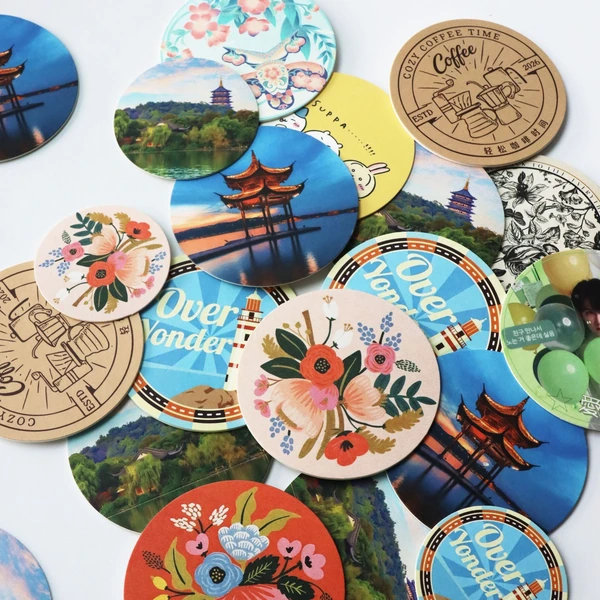
Size and thickness are two of the most important specifications in a custom coaster quotation.
Changing either dimension can affect raw material consumption, cutting requirements, production yield, packing quantity, shipping weight, and final price.
Common Round and Square Coaster Sizes
Round and square coasters are widely used because they fit many types of drinking glasses and cups.
Common reference dimensions include:
- 90 mm diameter: A compact round format for standard beverage applications.
- 95 mm diameter: Another commonly requested drink coaster size.
- 100 mm diameter: A versatile size for mugs, cups, and promotional coasters.
- 90 × 90 mm: A compact square format.
- 100 × 100 mm: A square format with additional visual space for artwork.
These are industry reference dimensions, not guaranteed stock specifications. The availability of a size depends on the selected material and production method.
How Thick Should Custom Coasters Be?
Thickness should be selected according to the material and intended use, rather than applying the same specification to every type of coaster.
| Material | Reference Consideration | What to Confirm |
|---|---|---|
| Cork | Common project references include 3–4 mm, with other thicknesses possible | Density, rigidity, surface texture, and edge quality |
| Silicone | Thickness depends on molded construction | Overall thickness, logo relief, flexibility, and flatness |
| Ceramic | Depends on ceramic body and backing design | Overall thickness, backing, edges, and protection |
| Absorbent paper | 2 mm is one commonly specified thick pulpboard format | Absorbency, board density, and printing |
| Leather / PU leather | Depends on material and layered construction | Backing, stitching, edge finishing, and final thickness |
Can You Order Custom-Shaped Coasters?
Yes. Depending on the selected material and production process, shapes may include circles, squares, rectangles, hexagons, hearts, logos, mascots, and other decorative outlines.
However, custom cutting is not the same for every material.
- Paper: Custom shapes may require cutting dies and suitable board layouts.
- Cork: Complex outlines must account for material structure and minimum feature dimensions.
- Silicone: Custom silhouettes may require dedicated molds and appropriate mold-release geometry.
- Leather: Cutting method, edge finishing, and material structure affect feasibility.
- Ceramic: Custom shapes depend on forming methods, tooling, and ceramic construction.
Buyer tip: For complicated shapes, provide a vector outline and ask the supplier to review narrow details, sharp corners, and minimum material widths before making a mold or cutting tool.
3. Custom Coaster Printing Methods Explained
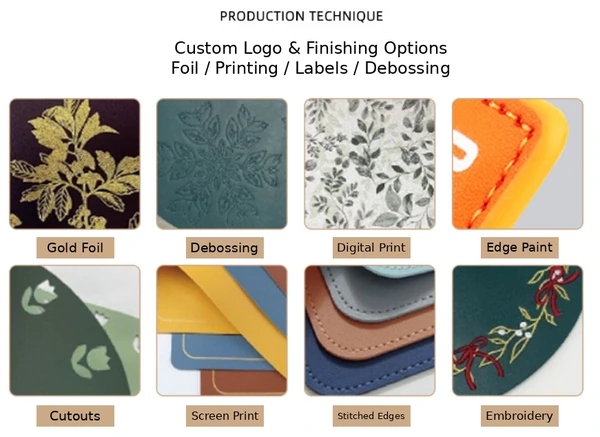
Choosing the correct logo process can improve branding while reducing avoidable setup costs and production issues.
The ideal printing method depends on three factors: the material surface, the artwork, and the quantity per design.
Screen Printing for Simple Logos
Screen printing transfers ink through a prepared stencil onto the product surface.
It is commonly considered for simple brand logos, short slogans, and solid-color graphics on compatible materials such as selected cork and leather-style surfaces.
Best suited to: One-color or limited-color artwork, bold graphics, repeated corporate logos, and many bulk promotional projects.
Production considerations: Screen preparation, ink compatibility, artwork complexity, number of colors, and material texture.
When comparing screen-printed quotations, confirm whether the setup charge is included and whether separate screens are required for multiple colors or designs.
UV Printing for Detailed Multicolor Designs
UV printing applies ink to a compatible surface and uses ultraviolet light to cure it.
It can support complex illustrations, multicolor graphics, and selected full-color artwork on suitable coaster constructions.
Best suited to: Illustrated souvenir designs, complex branding, colorful corporate merchandise, and selected retail collections.
Production considerations: Surface adhesion, ink compatibility, curing, protective finishing, background opacity, and printed durability.
UV printing on natural cork or textured leather-style materials may look different from the same artwork printed on a smooth, coated surface.
For detailed graphics, request a physical sample rather than relying exclusively on a digital mockup.
Full-Color Printing for Absorbent Paper Coasters
Absorbent paper coasters can be produced with suitable spot-color or full-color printing methods, depending on the artwork, board construction, and production quantity.
They are particularly useful for beverage brands, events, breweries, restaurants, and promotional campaigns.
However, printing and surface coatings must be selected carefully. A coating that improves appearance may also change how the coaster absorbs liquid.
For a project requiring absorbency, confirm that the quoted product is absorbent coaster-grade board rather than ordinary coated paperboard.
Explore our custom absorbent paper coasters for printed beverage coasters and wholesale applications.
Molded, Raised and Recessed Logos for Silicone
Silicone offers additional customization methods that are not based solely on surface ink.
A design may include raised lettering, recessed graphics, molded borders, or selected color-filled details.
These methods can produce a tactile finish that becomes part of the coaster construction.
For molded logos, artwork review should consider:
- Minimum line thickness
- Minimum gaps between letters
- Relief depth
- Color separation
- Positioning and mold structure
- Tooling charges
For buyers seeking bright branded accessories or custom-shaped promotional gifts, see our custom silicone coasters.
Debossing and Foil Stamping for Leather Coasters
For premium-looking corporate gifts, debossing and foil stamping are useful alternatives to conventional printed logos.
Debossing creates a recessed impression in a compatible leather or synthetic leather surface.
Foil stamping transfers a decorative foil effect, such as selected gold or silver finishes, using an appropriate stamping process.
The quality of the result depends on material texture, temperature, pressure, artwork details, and process compatibility.
Very fine text may need adjustment to achieve clean and consistent results.
Learn more about custom leather coasters with debossed and foil-stamped logos.
How Do You Choose the Best Logo Process?
| Artwork Requirement | Suggested Process | Check Before Ordering |
|---|---|---|
| Simple one-color logo | Screen printing | Material compatibility and setup cost |
| Colorful illustration | UV or suitable full-color printing | Color reproduction and surface adhesion |
| Tactile silicone logo | Molded raised or recessed effect | Mold cost and minimum feature sizes |
| Subtle leather branding | Debossing | Impression clarity and material finish |
| Metallic-style logo | Foil stamping | Foil adhesion and fine-detail reproduction |
| Full-color beverage promotion | Suitable paper printing process | Board absorbency and ink compatibility |
The suggested processes above are starting points. Final feasibility should be confirmed for the selected material and finished product.
4. How to Prepare Artwork for Custom Coaster Printing
Artwork preparation is one of the easiest ways to prevent unnecessary sampling delays and printing mistakes.
A well-prepared production file should clearly communicate the final dimensions, logo placement, colors, and cutting requirements.
Recommended Artwork File Formats
- AI or EPS: Useful for vector logos, cut lines, and scalable design elements.
- Vector PDF: Useful when artwork remains in editable or properly outlined vector form.
- High-resolution PNG or TIFF: May be suitable for selected raster printing processes.
- JPG: Can be used as a reference, but may not be sufficient for precise logo production.
For raster artwork, 300 PPI at the final reproduction size is a common starting point. The actual requirement depends on the design and printing process.
For text and line-art logos, vector files are generally preferable because they remain sharp when scaled.
Important Artwork Checks
- Finished size: State the exact final coaster diameter or dimensions.
- Cutting line: Provide a separate vector outline for custom shapes when applicable.
- Bleed: Allow extra artwork beyond the cutting edge for edge-to-edge printed designs; the supplier should confirm the required bleed distance.
- Safe margin: Keep important text and logos away from cutting boundaries.
- Colors: Include Pantone references if specific brand colors are important.
- Fonts: Convert fonts to outlines or include the required font files through an agreed secure transfer.
- Variations: Label different designs and colorways clearly.
- Orientation: Confirm the top, bottom, and any front/back printing requirements.
Will the Printed Colors Match My Pantone References?
Pantone references can help communicate the intended brand colors, but the physical outcome depends on the material and printing process.
For example, natural brown cork may influence the appearance of printed colors. Likewise, textured leather and absorbent paper do not provide identical printing surfaces.
For color-sensitive projects, approve a physical sample under suitable lighting and establish an agreed reference before bulk production.
Do not assume a color shown on a computer screen will exactly match the final printed product.
5. Understanding MOQ for Custom Coasters
MOQ stands for minimum order quantity. For customized coasters, MOQ is determined by more than the overall number of pieces in your purchase order.
The material, printing process, mold or cutting preparation, artwork variations, and packaging all affect the commercially practical minimum.
Why Does MOQ Vary Between Materials?
Different constructions require different production setups.
- Screen-printed cork: MOQ may be influenced by screen setup, material preparation, and quantity per artwork.
- Molded silicone: Tooling, mold capacity, and material-color preparation may affect the minimum quantity.
- Printed ceramic: Minimums depend on the ceramic blank, printing process, and packing requirements.
- Absorbent paper: Sheet printing layouts, board quantity, and die-cutting setup can influence MOQ.
- Leather: Material availability, cutting yield, and logo-finishing setup may affect the required quantity.
For this reason, a supplier may quote different minimum quantities for otherwise similar-looking coasters.
Does MOQ Apply to Each Design or the Total Order?
This is a particularly important question for souvenir brands, event organizers, and promotional merchandise distributors.
Suppose you request 1,000 coasters with five different designs.
That could mean 200 pieces per design, not 1,000 identical pieces. Each artwork may require separate printing preparation, setup, or tooling.
The total quantity alone does not establish whether the order meets the production minimum.
Always ask the supplier to confirm:
- Minimum quantity per design
- Minimum quantity per material color
- Whether assorted artwork is permitted
- Additional setup charges for separate designs
- Quantity per retail set
- Whether designs can be packed together
Practical RFQ wording: “Please quote 1,000 pieces in total, consisting of five designs with 200 pieces per design. Kindly confirm whether the designs can be combined within one production order.”
6. How Is the Wholesale Price of Custom Coasters Calculated?
A professional wholesale quotation should make the product specifications and pricing basis clear.
When comparing offers, it helps to separate the following cost components.
Material and Manufacturing Cost
The base cost includes the selected raw material, product construction, manufacturing requirements, and processing.
For example, a thick cork coaster may require more material than a thin one, while a molded silicone coaster has different production requirements from a die-cut paper coaster.
Printing and Decoration Cost
Printing cost can vary according to:
- Number of colors
- Artwork complexity
- Print area
- Single-sided or double-sided branding
- Surface preparation
- Required ink or finishing process
- Quantity per design
Tooling and Setup Charges
Some projects require molds, printing screens, dies, stamping tools, or other production preparation.
Ask whether these charges are included in the unit price or quoted separately.
For repeat orders, also confirm whether the tooling can be reused and whether any storage or replacement conditions apply.
Packaging Cost
Bulk cartons, individual polybags, paper sleeves, printed bands, protective inserts, and custom gift boxes involve different materials and labor requirements.
For retail orders, packaging can be a meaningful part of the total product cost.
Shipping and Import Costs
The total landed cost depends on the agreed Incoterm, shipment weight, volume, transport method, destination, and applicable import charges.
A lightweight paper coaster order and a similarly sized ceramic coaster order may have very different packed weights and freight costs.
A Simple Pricing Comparison Formula
To compare suppliers consistently, use:
Estimated unit procurement cost = (product subtotal + setup charges + packaging charges + freight and applicable import costs) ÷ total units.
Only include charges that are not already included in another line item. For a true landed-cost comparison, all quotations should use consistent scope and shipping assumptions.
Illustrative example only: If 1,000 coasters have a product subtotal of USD 600, setup charges of USD 80, separate packaging charges of USD 120, and freight plus applicable import costs of USD 200, the combined amount is USD 1,000, or USD 1.00 per coaster.
These figures demonstrate the calculation and are not a Lovecolour quotation.
7. Custom Coaster Packaging Options
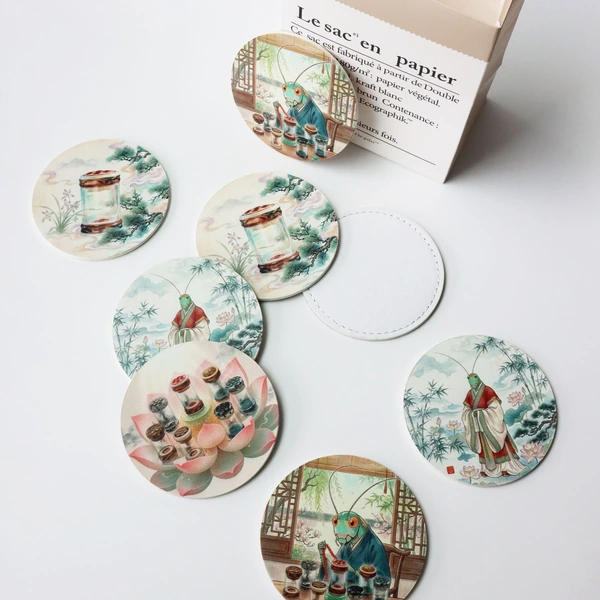
Packaging should be planned at the same time as the product itself, especially when coasters are intended for resale or corporate gifting.
Bulk Packaging
Bulk packaging is generally a practical starting point for hospitality supply and promotional distribution.
The precise packing method depends on the coaster material and the level of protection required.
Individual Packaging
Individual packaging may suit promotional gifts, retail sales, and event distributions where each coaster is handed to a separate recipient.
Four-Piece and Six-Piece Sets
Coaster sets are useful for retail, souvenir collections, corporate gifting, and branded home accessories.
They may contain one repeated design or multiple coordinated illustrations.
When ordering a set, specify whether quantity means individual coasters or complete sets. An order of 500 four-piece sets contains 2,000 coasters.
Kraft Paper Bands and Sleeves
Paper bands and sleeves are useful for displaying brand information while keeping a coaster set together.
They can work particularly well with natural cork products and minimalist merchandise collections.
Custom Gift Boxes
Custom boxes can improve retail presentation and gift appeal. Depending on project requirements, a box may include a printed logo, internal dividers, protective inserts, or a product label.
For fragile ceramic coasters, protective packaging is especially important.
Packaging tip: Confirm the full packed dimensions, pieces per carton, gross weight, and expected shipping method before approving the final packaging design.
8. Sample Approval Before Bulk Production
For customized promotional coasters, sampling is one of the most useful ways to reduce misunderstandings between buyers and suppliers.
There are two common sample categories.
Existing Material or Stock Samples
A stock sample may help evaluate basic material texture, dimensions, thickness, rigidity, and general construction.
However, a stock sample does not necessarily show how your custom artwork will appear.
Custom-Printed or Pre-Production Samples
A customized sample allows buyers to evaluate the selected material together with the requested logo, size, shape, and finish.
It is especially useful when:
- Pantone color matching is important.
- The artwork contains fine details.
- The coaster has an unusual shape.
- The design combines several colors or finishes.
- The order requires premium retail packaging.
- The coaster will be used in a demanding environment.
What Should You Approve on the Sample?
Before approving mass production, check the following:
- Material and construction
- Finished dimensions and thickness
- Logo size and placement
- Printed colors and appearance
- Front and back orientation
- Surface texture and edge finish
- Flatness and stability
- Packaging and set composition
- Any agreed functional performance requirements
For projects with demanding quality requirements, the parties should also agree on measurable tolerances, inspection methods, and acceptance criteria.
Important: A digital artwork proof confirms the layout, but it does not prove the actual material finish, printing adhesion, product performance, or packing quality.
9. Quality Control Checklist for Wholesale Coaster Orders
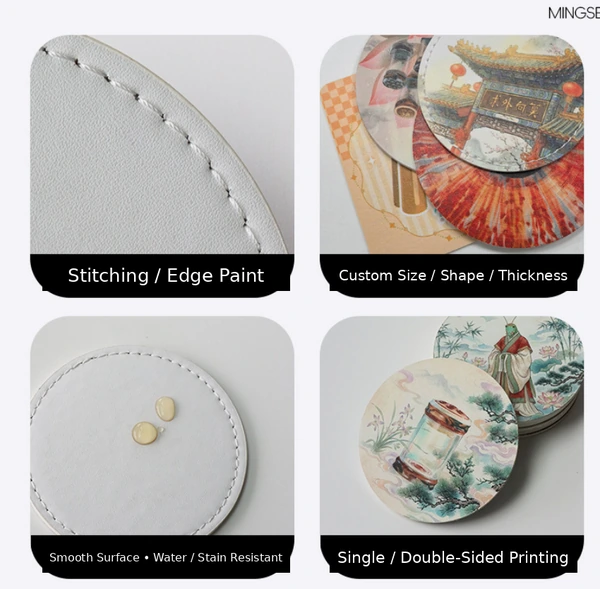
Quality inspection should focus on the risks associated with the selected material rather than relying on a single generic checklist.
| Material | Important Quality Checks | Potential Issue |
|---|---|---|
| Cork | Thickness, edge quality, surface texture, print clarity | Rough cutting, inconsistent material, weak print detail |
| Silicone | Color, molding, logo detail, flatness, edge finish | Excess flash, unclear lettering, deformation |
| Ceramic | Chips, cracks, printing, backing, packaging protection | Breakage, damaged corners, inconsistent surface finish |
| Paper | Board thickness, printed registration, absorbency, cutting | Uneven edges, color deviation, incorrect board grade |
| Leather | Material texture, logo impression, foil finish, edges | Inconsistent debossing, poor edges, finish defects |
Additional Checks for Multi-Design Orders
If a project includes different artwork, colors, or multiple coaster materials, verify:
- Approved design codes and versions
- Correct quantity per design
- Correct product-to-packaging combinations
- Labels and carton identification
- Mixed-set composition
- Final packing list accuracy
These details are particularly important when an order includes products for different branches, departments, stores, or event locations.
10. Shipping Custom Coasters from China
International shipping requirements vary by material, quantity, carton dimensions, and destination.
For bulk custom coaster projects, buyers may consider express courier, air freight, sea freight, or other available transport arrangements.
The preferred method depends on the shipment and required delivery schedule.
Express Courier and Air Shipping
These methods may be considered for smaller shipments, samples, or time-sensitive orders, subject to the destination and service availability.
Sea Freight
Sea freight may be worth evaluating for larger or heavier shipments when the delivery schedule allows.
DDP and Other Delivery Terms
Some buyers request Delivered Duty Paid (DDP) quotations to simplify certain shipping and import arrangements.
However, DDP availability, included services, local restrictions, and the party responsible for import formalities must be confirmed for the destination.
EXW and FOB quotations have different obligations and cost structures. They should not be compared without understanding which expenses are included.
What Shipping Information Should Buyers Provide?
- Destination country and postal code
- Full delivery address when available
- Required delivery date
- Final order quantity
- Preferred shipping term
- Whether several products will ship together
- Any special receiving or customs requirements
For multi-product promotional gift projects, consolidated shipping can sometimes simplify coordination. Whether consolidation reduces cost depends on the actual packing, transport route, and shipment details.
11. How to Find a Reliable Custom Coaster Supplier in China
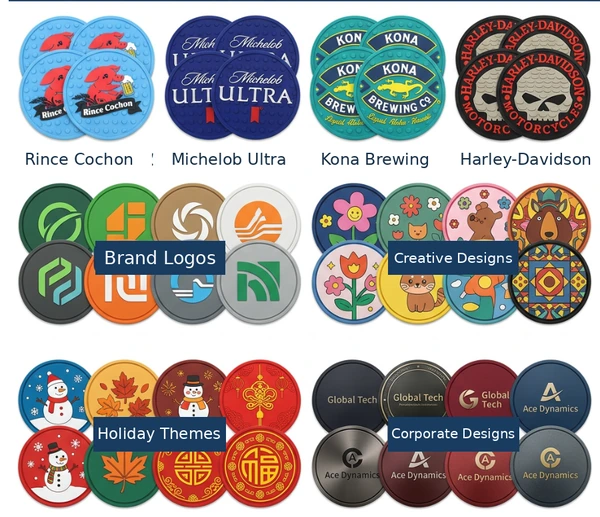
If you are looking for a custom coaster supplier in China, selecting the right sourcing partner involves more than finding a product photo at an attractive price.
The supplier should understand the intended application, suitable production process, artwork requirements, and quality risks.
Questions to Ask Your Supplier
- What material and construction are included in the quotation?
- Is the proposed printing method suitable for my design?
- What is the MOQ per artwork and per material color?
- Are tooling, mold, screen, or die charges required?
- Can I review a pre-production sample?
- What production tolerances and inspection criteria can be agreed?
- Can the supplier provide custom retail packaging?
- What is the production schedule after sample approval?
- Which shipping terms are available?
- How will artwork revisions and order changes be managed?
Working with a Guangzhou Promotional Product Supplier
Lovecolour is based in Guangzhou, China, and works with international B2B buyers sourcing customized promotional products and branded merchandise.
Our team can assist with artwork review, suitable product options, quotation coordination, sampling, packaging requirements, and production follow-up.
Because custom cork, silicone, ceramic, paper, and leather coasters use different manufacturing processes, a multi-material sourcing project should clearly identify the production specifications and applicable quality requirements for each product.
For buyers purchasing several categories of promotional merchandise, coordinated project management can also help reduce repeated communication and simplify order planning.
The objective is to select a practical production solution for your required quantity and application, rather than assuming one manufacturing method is suitable for every coaster.
12. Custom Coaster Wholesale RFQ Checklist
A complete request for quotation helps suppliers prepare accurate offers and reduces follow-up questions.
Use the following checklist before sending your inquiry:
Custom Coaster RFQ Checklist
- Product: Cork / silicone / ceramic / absorbent paper / leather
- Application: Restaurant / event / corporate gift / retail / other
- Shape: Round / square / rectangular / custom
- Size: Diameter or length × width
- Thickness: Preferred thickness or reference sample
- Artwork: AI / PDF / EPS / high-resolution image
- Logo process: Screen printing / UV printing / molded / debossed / other
- Quantity: Total pieces and quantity per design
- Design variations: Number of logos, artworks, and colorways
- Packaging: Bulk / individual / 4-piece set / gift box
- Samples: Stock sample or custom sample required
- Delivery: Destination country and postal code
- Timing: Target delivery date
- Quotation terms: Requested Incoterm and currency
- Special requirements: Performance, testing, labeling, or documentation
Sample Email for Requesting a Wholesale Coaster Quote
Subject: RFQ – Custom Printed Coasters for Bulk Order
Hello,
We are looking for custom promotional coasters for an upcoming project.
Product material: [Material] Size and thickness: [Specifications] Logo printing: [Method or artwork details] Quantity: [Total quantity and designs] Packaging: [Requirements] Destination: [Country and postal code] Required delivery date: [Date]
Please provide your quotation, MOQ per design, any setup or tooling charges, sample options, estimated production time, and available shipping terms.
Our artwork is attached for reference.
Thank you.
This level of detail helps suppliers evaluate the same requirements and makes their quotations easier to compare.
13. Frequently Asked Questions About Wholesale Custom Coasters
What is the minimum order quantity for custom printed coasters?
MOQ varies by material, printing process, product design, and packaging. A molded silicone coaster and a printed paper coaster may have different production minimums. Request the MOQ per design rather than assuming the full combined order qualifies.
Can I order multiple designs in the same bulk order?
Multiple designs may be possible, but each artwork can involve separate setup, tooling, or printing preparation. Confirm the quantity per design and any additional charges before ordering.
What is the most economical printing method for custom coasters?
There is no universally cheapest method. Screen printing can be competitive for simple repeated logos, while suitable digital printing may be more practical for certain complex designs. Material compatibility, setup costs, and quantity should determine the choice.
Can I customize both the shape and the logo?
Yes, custom shapes and logos may be possible across several coaster materials. Manufacturing feasibility and tooling requirements differ by material and should be reviewed before quotation.
Can you match Pantone logo colors?
Pantone references can guide color matching, but the achievable result depends on the ink, substrate, surface texture, and production process. A physical sample is recommended for color-sensitive orders.
Can I print on both sides of a coaster?
Double-sided customization may be possible for selected constructions. It depends on the material, backing, and printing process. Some coasters have functional or protective backing materials that should not be treated as standard printable surfaces.
Are custom coasters waterproof and heat resistant?
Performance depends on the selected material and finished construction. Silicone is generally water-resistant, while absorbent paper serves a different purpose. Cork, leather, and ceramic constructions vary. Do not assume a specific heat rating or waterproof performance without product-specific verification.
How long does custom coaster production take?
Production time depends on the material, tooling, artwork approval, quantity, and packing requirements. The schedule should be confirmed after the final specifications and sample requirements are agreed.
Can I request a sample before a large order?
Sample arrangements can be discussed with the supplier. Existing material samples and fully customized samples may involve different preparation work, fees, and shipping costs.
Can I order coaster gift sets with custom packaging?
Yes, selected coaster products can be developed as individual items or coordinated sets. Packaging options may include paper sleeves, belly bands, protective inserts, and custom gift boxes, depending on the project.
What is the difference between EXW and DDP pricing?
EXW generally places most transport and export-related responsibilities on the buyer from the agreed pickup point, while DDP places substantially more delivery and import obligations on the seller, subject to the agreed contract and applicable regulations. Confirm exactly what each quotation includes.
Can different coaster materials be combined in one merchandise project?
Yes, a multi-material project may be coordinated, but each product should have its own specifications, MOQ, artwork approval, and quality requirements. Shared packaging or shipment arrangements should be evaluated separately.
14. Explore Custom Coaster Products
Different coaster materials offer different branding and functional options. Review the individual product categories below to shortlist the most suitable construction for your project.
- Custom Cork Coasters & Placemats – Natural cork texture, logo printing, custom shapes, and tabletop accessories.
- Custom Silicone Coasters – Flexible construction, custom material colors, and molded logo designs.
- Custom Ceramic Coasters – Decorative printing and retail or souvenir gift collections.
- Custom Absorbent Paper Coasters – Printed beer mats and promotional drink coasters for beverage service.
- Custom Leather Coasters – Leather and PU leather options with debossing, foil stamping, and selected printed logos.
If you are still deciding which material to choose, read our custom coaster material comparison guide before requesting samples.
Final Buying Advice: Confirm Specifications Before Comparing Prices
Successful wholesale coaster sourcing begins with clear specifications.
Before placing an order, make sure the material, size, printing process, artwork version, quantity per design, packaging, sample requirements, and shipping terms are clearly agreed.
A quotation based on complete information is more useful than a low unit price that excludes necessary setup charges, packaging, or freight.
For promotional distributors, hospitality purchasing teams, retail brands, and corporate buyers, taking time to review these details can reduce the risk of artwork errors, unexpected costs, and production misunderstandings.
Request a Custom Coaster Wholesale Quote
Looking for custom printed coasters, branded drink mats, or coordinated coaster gift sets?
Lovecolour helps overseas businesses source customized promotional products with attention to artwork, product specifications, sampling, packaging, and order coordination.
Send us your design, preferred material, dimensions, quantity, and delivery destination. We can review your requirements and help identify a suitable production approach.
Guangzhou Lovecolour Promo Gift Co., Ltd. | Guangzhou, China